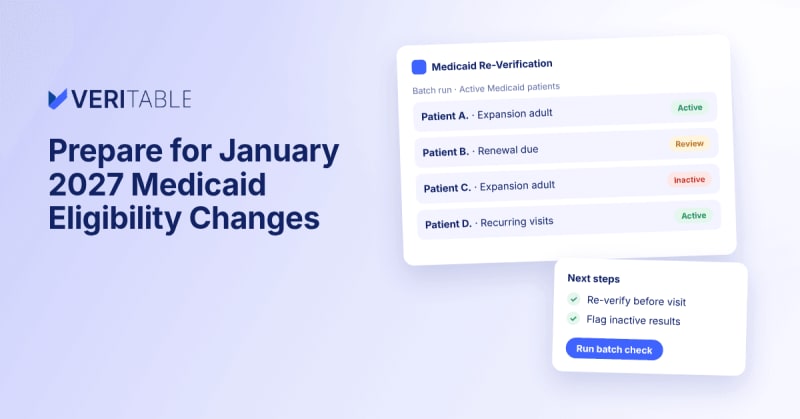
How to Prepare Your Practice for the January 2027 Medicaid Eligibility Changes
On January 2, 2027, most existing Medicaid enrollees will still have coverage. And that's what makes the date …


A Medicare patient is checking in at your front desk, and their card is still at home. Or they hand you an old one. Or they read off a number they only half remember.
Without that number, the eligibility check can’t run and the claim can’t go out. Nothing else in your file will rebuild it, which is why billing stalls right here.
But the number isn’t out of reach. An MBI lookup can pull it up electronically from a name, a birth date and one more detail, and a few habits keep that safe.
This article will cover:
Nothing in your practice’s records can produce a patient’s MBI, and that’s by design. The Medicare Beneficiary Identifier, or MBI, is the 11-character identifier Medicare assigns to each beneficiary. It’s non-intelligent: none of its characters encode anything about the patient.
No birth date in it. No initials. Nothing you could work out from the chart.
The MBI replaced an older Medicare identifier that was based on a Social Security number, or SSN, so the SSN sitting in your registration record won’t get you to the MBI on its own.
So the SSN on file doesn’t cover you. No formula turns one into the other.
Each of the usual workarounds for a missing MBI costs you a delay or a rejection. Both the eligibility check and the Medicare claim need the number, and the eligibility check is where everything stops first.
You can wait on a patient who may never find it, submit with what you have and get a rejection plus the rework behind it, or hold the claim, which is the safest option and the slowest.
CMS also lists two other routes to the number: the secure lookup tool on the portal run by your Medicare Administrative Contractor, or MAC, which needs the patient’s SSN, and the remittance advice, which only helps for a patient you billed with the old SSN-based identifier before 2020.
Just calling the patient works for one missing number. Try it across a busy Monday and the follow-up calls turn into somebody’s whole morning.
An MBI lookup is an electronic search that takes a patient’s basic demographics and returns their MBI when it finds a match. Some lookup services offer two versions of it.
With the SSN, you send first name, last name, date of birth and SSN. Adding the SSN raises the chance of a match, so use it whenever the patient can give it to you.
Without the SSN, you send first name, last name, date of birth and U.S. state. You won’t find this version on your MAC’s portal: CMS’s guidance for that lookup requires the SSN.
If there’s no match, no number comes back. The routes you had before are still there: the patient, your MAC’s portal if you have the SSN, and an old remittance advice if you billed the patient before 2020.
If searching by name sounds like guesswork, it helps to know what happens to what you send, and that varies by service. Some run the number they find through Medicare’s own eligibility system before returning it. But a lookup can still return a wrong match, so check the result against your own records before you use it.


A lookup is useful at three points in your week, and each one removes a different cost.
At registration and check-in, the number comes back while the patient is still standing at the desk. Nobody has to call them afterward to chase it.
In pre-visit eligibility checks, the run doesn’t stall on a blank MBI field days before the visit. The check goes through, and the billing delay that would have started there doesn’t happen.
On claims held for a missing identifier, the queue clears without anyone trying to reach a patient who’s already gone home, and those claims leave with a number on them instead of sitting in the hold queue or going out without one. That’s a rejection avoided.
If you’re thinking this rarely comes up at your practice, look at your held-claims queue before you decide. The missing numbers that never surface at the desk end up there.
A lookup can return an MBI that’s no longer current, so confirm it before it goes on a claim. Medicare can issue a new MBI, including after a suspected compromise. That means a card can be genuine and still out of date, and the number a lookup returns can be out of date too.
The habit that covers this: run the eligibility check with the number you got back. If the number is outdated, you find out there, not on a remittance after the claim has already gone.
That doesn’t make the lookup pointless. A number you can check beats having nothing to check at all.
A lookup touches Medicare’s eligibility data and your patients’ SSNs, so it comes with rules about who runs one and what for. Each provider has to be set up for the lookup transaction before lookups can run under their name.
The what-for comes down to one test you can apply to your own use: is this lookup for Medicare fee-for-service business, such as preparing a claim? If it isn’t, don’t run it. Checking whether a patient has Medicare Advantage or Part D coverage falls outside that. So do marketing and lead generation.
Being a provider doesn’t put every lookup inside permitted use. It settles who may ask. What the lookup is for is a separate question, and it applies every time.
A few habits keep you on the right side of these rules. Limit lookups to the staff whose work actually needs them, and don’t leave copies of a patient’s SSN anywhere it isn’t needed. And keep a record of every lookup, so you can always show who ran it and why.
An MBI can’t be rebuilt from anything in your file, and it was designed that way. You can still retrieve it from a name, a birth date and, depending on the service, an SSN or a state, as long as you confirm the number before it goes on a claim and keep every lookup inside permitted use.
If you’re deciding where to start, pick the moment that’s already costing your practice the most. The held-claims queue is easy to measure: pull your own report and count the claims waiting on a missing MBI.
Join over 3,200 subscribers and keep up-to-date with the latest innovations & best practices in Healthcare IT.
On January 2, 2027, most existing Medicaid enrollees will still have coverage. And that's what makes the date …
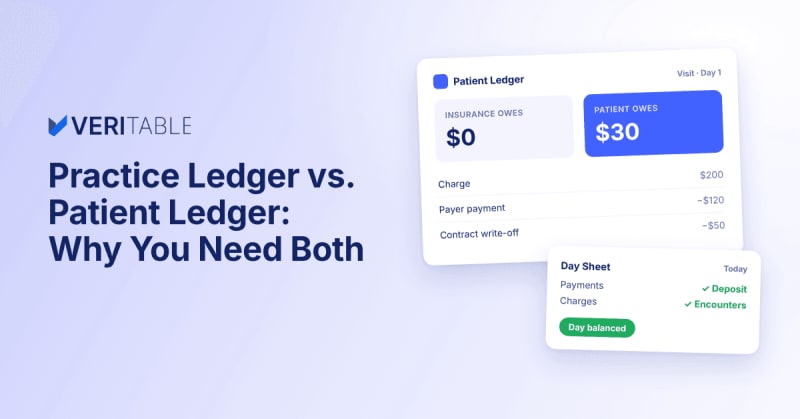
Suppose you close the day sheet and it balances. Then you open a patient's account and see a $30 balance that …

Your billers look up CPT codes all day, and most of the time it feels like a quick job: type a description, …

No pricing page to dig through. No demo call to sit through first. Just what you'd actually pay, sent straight to your inbox.
One email. Zero spam.