Fixing Onboarding Alone Won't Solve Your EHR Training Gap. This Will.
Clinicians forget the 70% of what you taught them once training ends, and reinforcement doesn’t follow. That’s not a training problem.
Watch the video to see what closes the gap.
You already tried the obvious fixes:
And three months after go-live:
Here's the part nobody puts in the onboarding budget request: people forget the majority of what they learn within a week of learning it.
Not because your training was weak
Because that's how memory works, and no class length fixes that on its own
In this session, Julie breaks down why onboarding alone can't carry adoption long-term, and what a continuous learning model looks like inside a health system that doesn't have room for one more initiative.
Who This Is For
What You'll Walk Away With
Here's exactly what the session covers, checkpoint by checkpoint.
Why the Ebbinghaus Forgetting Curve explains your post-go-live support tickets, and why it's neither a training failure nor a learner failure
The early warning signs that your onboarding program stopped working weeks ago (help desk volume and workaround habits are the first tells)
How to break your 8-hour classroom into reinforced learning without rebuilding your curriculum from scratch
A reinforcement framework built around four checkpoints: 2 weeks, 30 days, 90 days, and 180 days
Where to look first if your training ROI still isn't showing up in your adoption numbers
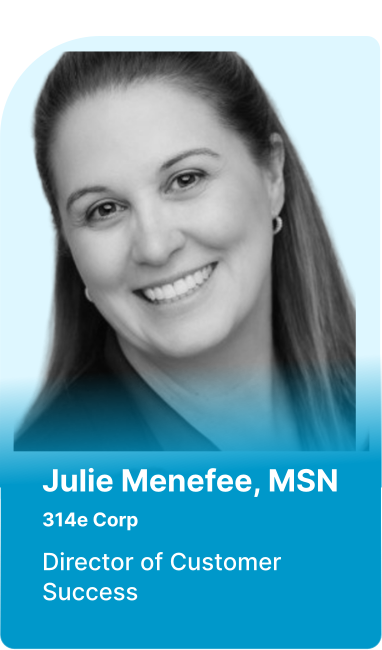
- 15+ years directing Epic training programs and clinical application teams
- 30+ years as a Registered Nurse
- At Inova Health System, led training for Epic's original "Big Bang" go-live across 5 hospitals, 200+ ambulatory clinics, and 20,000 end users
- Built an Ambulatory Provider Onboarding program that raised Inova's KLAS-tracked EHR experience score by 20 points
- Now leads digital learning strategy for Jeeves, helping health systems modernize EHR training and adoption at scale
Onboarding training alone isn’t the fix.
Check what actually is.👇🏻